Manta Drone
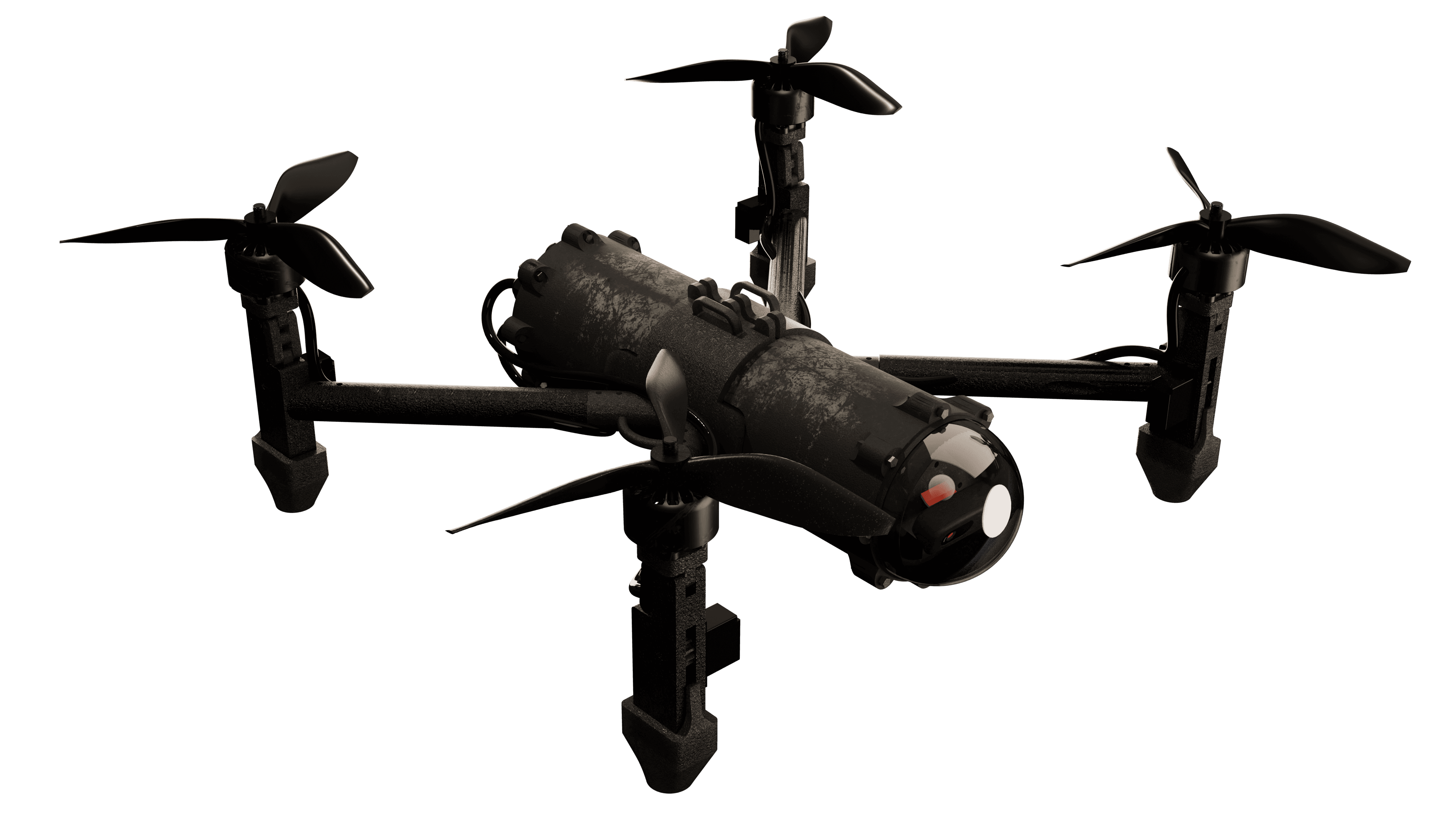
A hybrid dual-use surveillance drone able to operate in both water and air.
00
the challenge
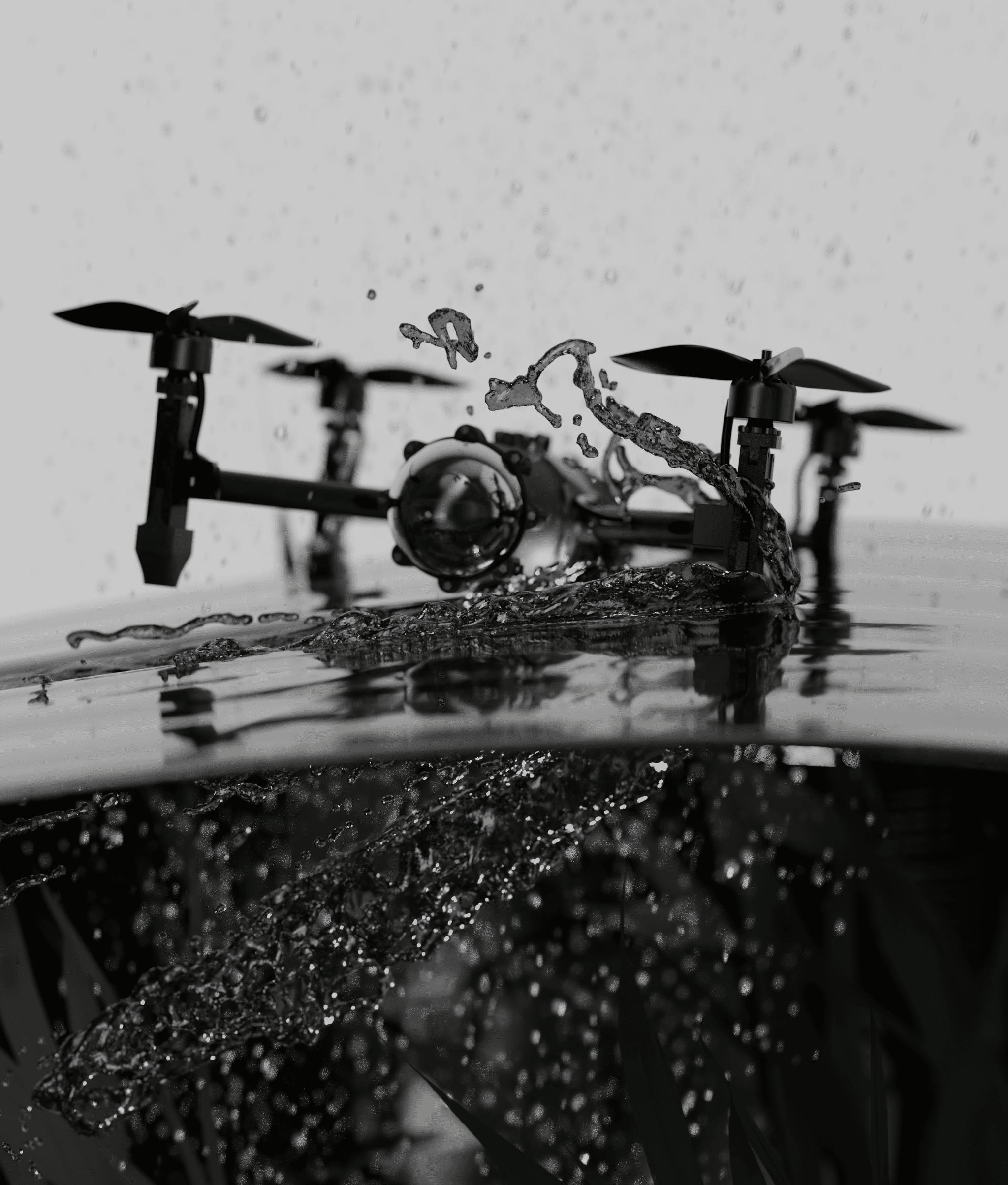
The initial challenge for this project was to design an innovative water surface surveillance drone that could enhance military operations. We re-defined this challenge to create a drone capable of flying through the air as well as navigating through water.
This project was initiated by MIND, an innovation-driven startup that is linked directly to the Dutch Ministry of Defence. They are always seeking innovative ideas that could improve military operations.
Together with 5 other enthusiastic students, we were given the design brief to create an innovative surveillance drone for water deployment, with some specific requirements like single-operator use, modularity and stealth.
As a team, we dug deeper into the world of military surveillance as well as the diverse existing range of drones. Based on our own research, we concluded that designing a water drone would serve the purpose of the client, but would have a very narrow scope of usefulness. Though water drones have certain advantages over air drones, the opposite can certainly be said as well. Both have advantages and disadvantages.
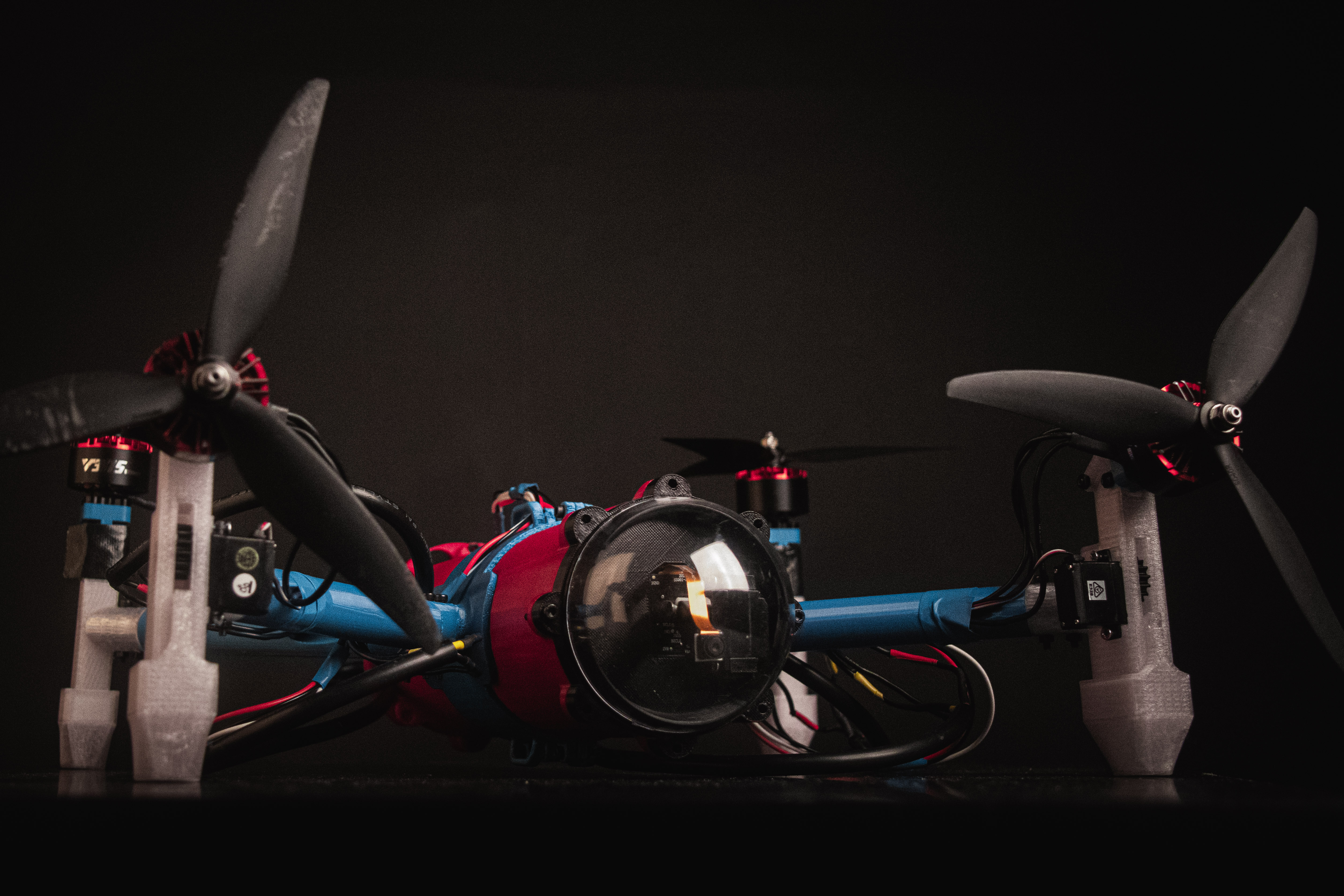
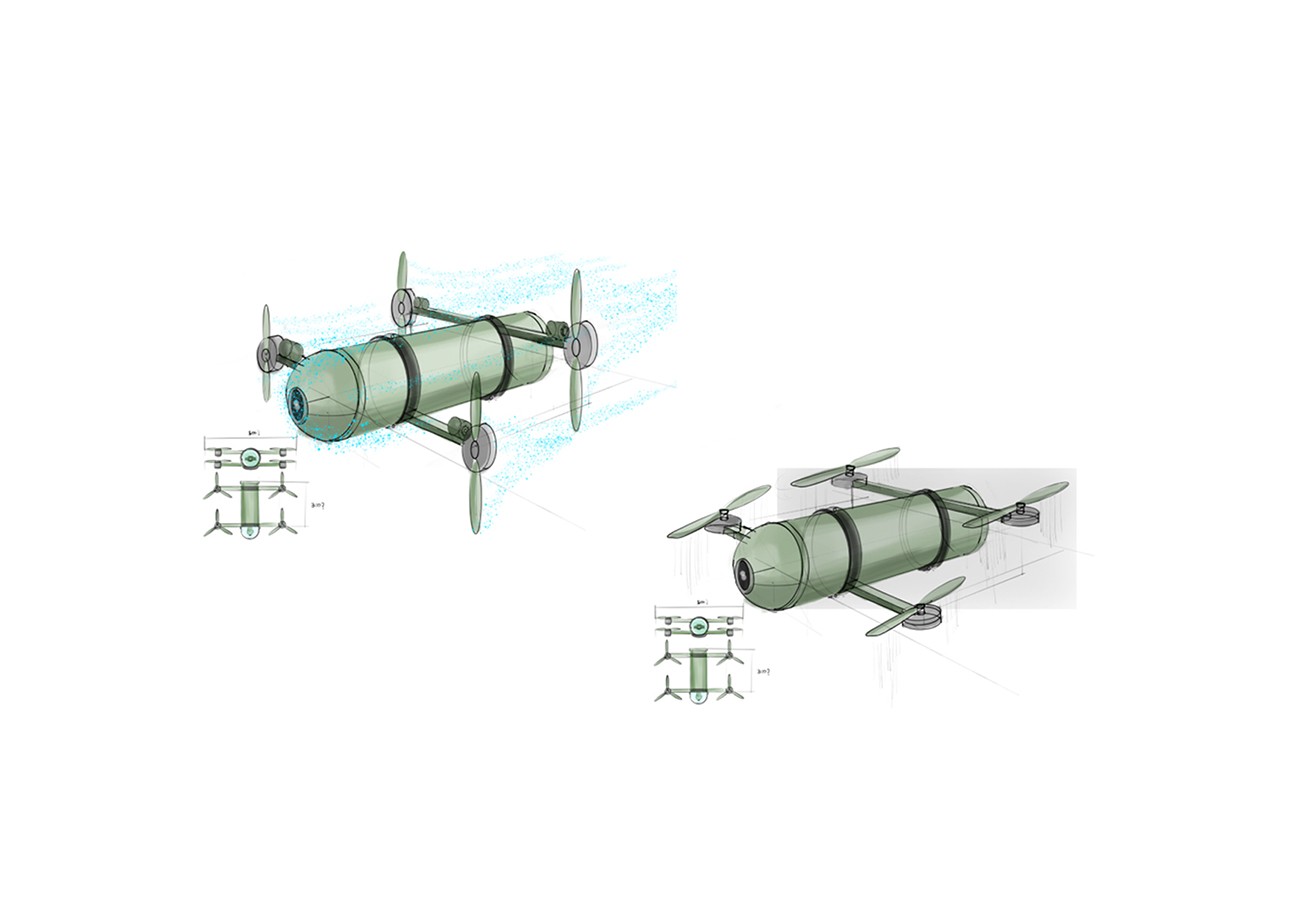
Therefore, we set the ambitious goal of designing a hybrid air-water drone, seeing the benefits that multi-environment use would offer. The main challenges consisted of waterproofing the body, integrating the complete electronics system, and figuring out water-air transitions. A very complex problem, which was fun to work on with a very motivated team and a client who showed great interest.
The end result was a proof-of-concept design that showed that 3D printing a waterproof drone body is possible. Our design showed solutions to the challenges of battlefield producibility, modularity, single operator usability and pleased the client very much.
year
2025
timeframe
6 months
tools
Solidworks, INAV
category
Industrial Design Engineering
01

02
03

04

05

06
My role
For this project, I was mainly involved in the integration of the electrical components within the body of the drone. I also developed an autonomous object detection system backed by a YOLO vision model, embedded locally on a Raspberry Pi 4. This project brought me a lot of engineering knowledge and was a fun challenge.